
The stifle joint, otherwise known as the knee in humans, can be a common source of pain or discomfort in dogs especially small dogs and bulldogs who have a condition known as chondrodysplasia which means they have a genetic predisposition for bone growth and development disruption.
Beyond traditional veterinary medicine, exploring complementary treatments like animal chiropractic care, class 4 laser, extracorporeal shockwave and exercise rehabilitation can significantly improve your dog’s comfort and quality of life.
🔷 What are symptoms of Luxating Patella?
• Intermittent skipping on the affected hind leg (shaking leg out)
• Hind leg lifted during or after running or walking
• Difficulty sitting comfortably or reluctance to jump
• Awkward posture (bow-legged in the hind limbs)
• Grinding or popping sounds when flexing and extending the leg
*If you notice any of these signs, it’s important to schedule a vet visit to confirm the diagnosis and rule out other conditions. As dogs age along with various wear and tear factors, arthritis or degenerative joint disease of the knee joint can also complicate patella subluxation(s) and make their symptoms more frequent and obvious.
🔷 What causes Luxating Patella or Patella Subluxation?
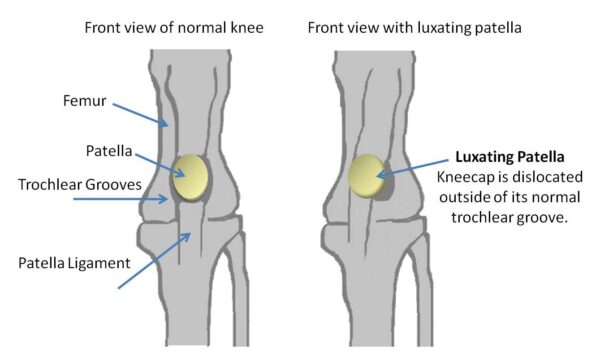
Luxating/subluxated patella is a tracking disorder, meaning the patella (kneecap) becomes displaced from its normal position in the patellar groove within the femur (thigh) bone. The most common form of luxation is medial patellar luxation (MPL), where the kneecap moves inward.
Several factors may contribute to luxating patella, including:
🔶 Genetics: Small breed dogs, like Chihuahuas, Yorkies, and Maltese, are more prone to anatomical differences that affect the knee joint as are bulldog breeds but any dog can be affected with a patella subluxation at some point in life.
🔶 Abnormal Bone Development: Deformities in the femur, tibia, or the patellar groove can predispose your dog to luxating patella.
🔶 Age and Arthritis: As your pet ages, degenerative joint changes like arthritis can make luxating patella more prevalent.
🔷 How does Animal Chiropractic/Rehab help animals with Luxating Patella/Patella Subluxation?
➡️ Animal chiropractic can be effective in treating luxating patella, especially in mild to moderate cases by focusing on improving joint alignment throughout the limbs and spine, which may help with knee tracking and prevent further joint wear.
➡️ Class 4 laser helps to slow down degenerative changes in the joint and minimizes both acute and chronic inflammation (often caused by repetitive stress, wear and tear/grinding or crepitus of patella (kneecap) which eventually lead to bone osteophytes in the joint.
➡️ Extracorporeal Shockwave can help with bone remodeling for any osteophytes/bone spurs that have developed as a result.
➡️ Exercise rehabilitation helps with both strength, flexibility, proprioception for better balance and overall improved movement patters
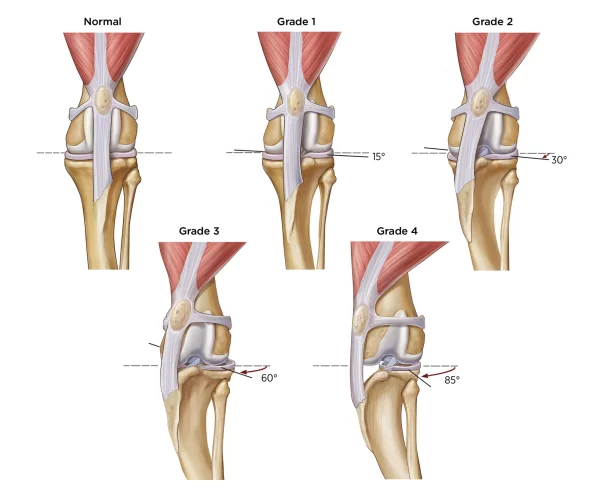
🔷 Luxating patella is graded from 1 to 4 based on severity:
🔶 Grade 1: The patella mostly tracks normally but can be manually luxated or moved out of place but kneecap will go back into its groove on its own.
🔶 Grade 2: The patella may occasionally track abnormally and get stuck, but it can be manually relocated or your dog can “shake” it back into place.
🔶 Grade 3: The patella almost always tracks abnormally and is usually misaligned in the groove,but can still be relocated manually.
🔶 Grade 4: The patella is permanently luxated and cannot be manually relocated.
For more severe grades (3 and 4), animal chiropractic may be a helpful supportive treatment but may not fully resolve the issue. In these cases, surgery may be considered as an option especially if your dog is younger in years.
For mild to moderate cases, regular chiropractic adjustments can promote proper tracking of the kneecap, reducing wear on the joint, alleviate pain, and improve your dog’s mobility.
🔷 When choosing an animal chiropractor, credentials matter. Be sure to choose a provider who is properly trained and certified in animal chiropractic care. Only veterinarians or chiropractors who have completed postgraduate education in animal chiropractic are eligible to become certified.
If your dog is experiencing significant discomfort, chiropractic care should be used in addition to veterinary care. Complementary care should always be part of a comprehensive health plan, alongside regular veterinary check-ups.
While surgery may be necessary for severe cases, animal chiropractic care offers a non-invasive, complementary treatment that can provide significant relief, improve mobility, and slow the progression of joint damage.
Consider adding animal chiropractic & rehab to your dog’s healthcare team for a holistic, integrative approach to their well-being… Your Pet’s Path to Recovery via MAR Animal Rehab & Chiropractic